The question arrives earlier than it used to. A patient in her late twenties opens a photo on her phone, taken mid-laugh, and points to a faint vertical line between her brows that stayed put for a beat after her face relaxed. She wants to know whether treating it now counts as good planning or an expensive habit she does not need yet.
Preventative Botox has become one of the most searched aesthetic topics in the country and one of the most oversold. Social media frames it as insurance against aging itself. Skeptics call it a treatment invented for a problem that has not happened. The useful answer sits between those positions and depends on how much your face moves and what it has already started to record.
This guide covers what preventative treatment does at a physiological level, what the published evidence actually supports, what a decade of it costs, and how to judge whether your twenties or thirties are the right moment to begin. Botox and Dysport in Dallas, TX are the most requested treatments at Lily Aesthetics and Wellness, and the timing question comes up in nearly every consultation we have.
What Is Preventative Botox?
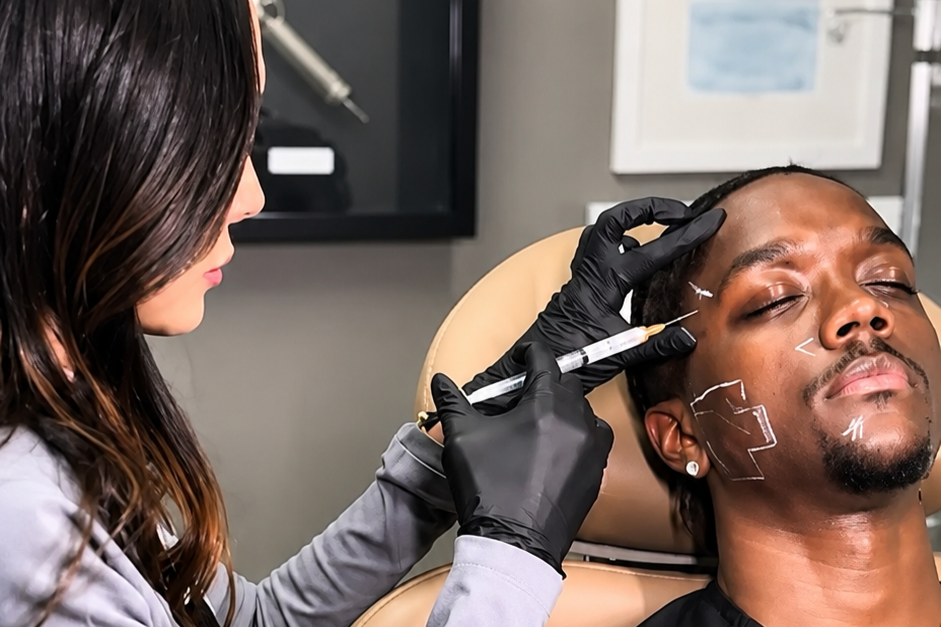
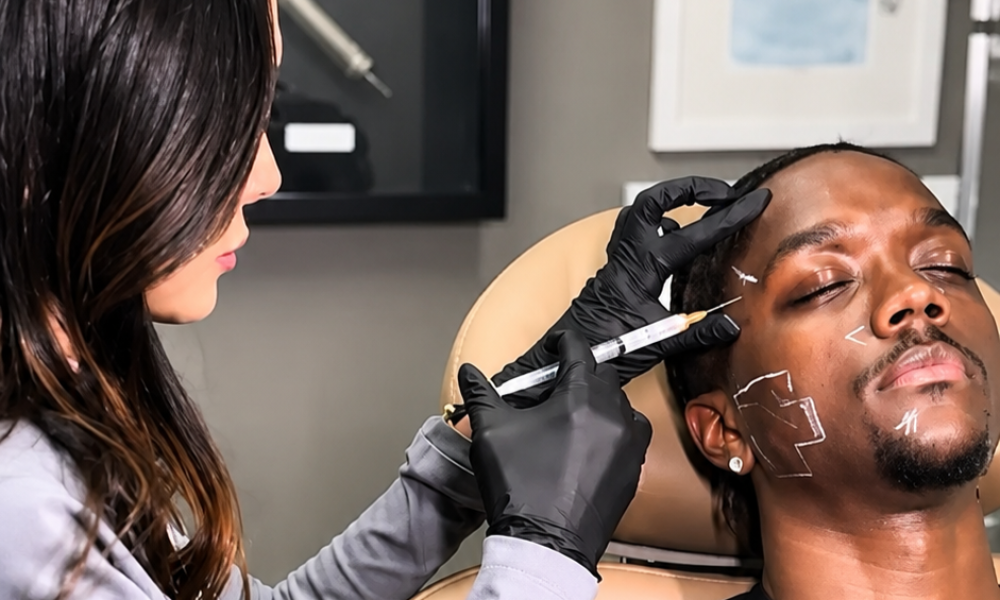
Preventative Botox is the use of botulinum toxin type A in conservative doses, placed in expressive muscles before repeated movement has etched a permanent crease into the skin above them. The aim is to reduce the force of the movement while leaving your expressions intact and legible.
The product is identical to the one used on established wrinkles. The strategy is what changes. Preventative plans use fewer units, place them more sparingly, and treat reduced movement as the goal rather than absent movement. The word preventative carries a promise worth examining closely, because what the treatment prevents is specific and narrow. It slows the conversion of a dynamic line, one that appears only when you move, into a static line, one that stays on your face at rest. It has no effect on volume loss, sun damage, or skin laxity, all of which follow their own timelines and call for their own treatments.
How Do Facial Lines Actually Form?
Every expression folds the skin along the same paths, thousands of times a year. Think of a sheet of paper. The first fold leaves no trace once you smooth it out. The hundredth leaves a crease you can see from across the room. Skin behaves similarly, with the difference that skin repairs itself, at least for a while. Collagen and elastin spring the surface back flat after each contraction, and in a twenty-two-year-old that recovery is close to complete.
Two variables decide how long that holds. The first is how forcefully and how often you contract. Habitual squinters and people who furrow while concentrating reach the static stage years ahead of those with quieter faces. The second is the condition of the skin doing the folding, which is governed largely by collagen density and cumulative sun exposure. Recovery slows through the thirties, the fold stops fully releasing, and the dermis begins remodeling along the crease line. That is the moment a line stops being an expression and starts being a feature.
The key idea: Preventative Botox works on the mechanism, not the calendar. It is worth considering once your lines have begun lingering after the expression ends, whatever age that happens to be. A smooth face at rest has nothing yet to prevent. |
What Does the Research Say About Starting Early?
Long-term evidence on preventative dosing is thinner than the marketing implies, and the most cited piece of it involves two people.
In 2006, William J. Binder, a facial plastic surgeon at the UCLA School of Medicine, published a comparison of 38-year-old identical twin sisters in the Archives of Facial Plastic Surgery. One twin had received botulinum toxin in the forehead and glabellar region two to three times a year for 13 years. The other had been treated twice in that entire period. At the end of the observation, imprinted forehead and glabellar lines were absent in the regularly treated twin and clearly present in her sister, while untreated areas such as the nasolabial folds aged comparably in both women (Binder, 2006). A follow-up extended the comparison to 19 years and reported the same pattern.
Two sisters do not make a clinical trial, and the report is a case study rather than a randomized comparison. It is, however, unusually clean. Identical genetics, similar lives, one variable held apart for more than a decade. Binder also proposed a mechanism worth knowing about. Patients on long-term treatment may gradually stop attempting to contract the muscle at all, and relieving the chronic mechanical pressure on the skin may give the dermis room to remodel. Both effects would compound quietly over years, which is exactly the kind of change a short study cannot capture and a twin can.
Where Does Preventative Treatment Matter Most?
Different areas carry different urgency. The glabella rewards early attention more than anywhere else on the face, because the corrugator muscles pull with real force and the resulting line is the hardest one to correct once it has set.
Area | The movement behind it | What early treatment targets | What waiting usually means |
|---|---|---|---|
Glabella (between the brows) | Frowning, squinting into Texas sun, concentrating at a screen | Softening the pull of the corrugator muscles so the fold never deepens | The most stubborn static line on the face, often needing filler alongside tox to correct |
Forehead (frontalis) | Raising the brows in conversation and surprise | Reducing the depth of horizontal folds while keeping natural brow lift | Horizontal etching that stays visible at rest and rarely clears fully |
Crow’s feet | Smiling and squinting | Limiting how far the lines radiate and how sharply they set | Fine lines at rest, usually alongside thinning skin at the outer eye |
Bunny lines (bridge of the nose) | Scrunching, often unconsciously | Keeping the diagonal creases from printing | A minor concern for most faces, worth treating only when the movement is pronounced |
The pattern in that table is consistent. Areas driven by strong, repetitive muscle pull respond best to early intervention. Areas where the line comes mostly from volume loss or thinning skin respond better to other tools, which is why dermal fillers in Dallas, TX and collagen-stimulating treatments enter the conversation later rather than sooner.
Who Is Preventative Botox Worth It For?
The honest screening question is whether anything is currently printing. Look in a mirror with your face completely relaxed, in daylight rather than bathroom lighting. Then make your strongest frown, hold it, release, and watch what the skin does over the next five seconds. If the line vanishes instantly, you have a dynamic line and time on your side. If a shadow lingers, the crease has started to record.
Early treatment tends to be worth the investment in two situations:
- A faint line that stays visible for a beat after your face relaxes, most commonly between the brows or across the forehead
- A family pattern of deep expression lines appearing early, combined with a face that moves a great deal by profession or personality
For everyone else, the case is weaker. Skin that snaps back flat at twenty-four has nothing to prevent, and treating it buys reassurance rather than results. That budget usually does more work as daily broad-spectrum sunscreen, a retinoid, and regular facial treatments in Dallas, TX that keep the skin barrier in good condition. Sun protection remains the highest-yield anti-aging decision available at any age, and no injectable substitutes for it.
Your Twenties
Most twenty-somethings have full collagen, fast recovery, and no static lines whatsoever. For them the reasonable answer is to wait and watch. The exception is the strong expresser who already shows a resting shadow between the brows at twenty-seven or twenty-eight. In that case, small doses placed conservatively can keep a line from deepening during the decade when the skin still repairs itself well. Micro-dosing, sometimes marketed as baby Botox, fits this scenario. It uses a fraction of a corrective dose and preserves nearly all movement.
Your Thirties
The thirties are where the argument gets strong. Collagen production has slowed, recovery after each contraction is incomplete, and lines that used to disappear now hold for a second or two. This is the window where preventative treatment does the most work per unit, because you are slowing a process that has started rather than reversing one that has finished. Patients who begin here often need less product long term than those who wait until a line is fully etched and then ask to have it erased.
What Does It Cost Over a Decade?
Neurotoxin is priced per unit, so the cost of a preventative plan tracks the dose. A conservative glabellar treatment uses meaningfully fewer units than a corrective one on the same muscle, and many preventative patients come in two to three times a year rather than four. That keeps annual spend lower than most people expect, though the commitment is ongoing by design.
The claim that starting early saves money is plausible and unproven. Correcting a deep static line later usually requires more units, and often filler or resurfacing alongside the tox, which is not cheap. Against that, a decade of maintenance is a decade of maintenance. The reasonable framing is that you are buying the appearance you want during the years you are living them, rather than making a bet on future savings. If treatment becomes part of your routine, our membership program spreads the cost across the year and tends to make the math easier to plan around.
What Are the Risks of Starting Too Early?
Botulinum toxin has one of the longest safety records in aesthetic medicine, and the concerns specific to early, long-term use are mostly about technique and judgment rather than the drug itself.
Over-treatment reads on the face. Aggressive dosing in a young patient flattens expression in a way that is obvious to everyone except the person who ordered it. The forehead is the usual culprit, particularly when the frontalis is treated heavily without balancing the muscles that pull the brow down.
Muscles do thin with sustained use. In the glabella this is generally welcome, since a weaker corrugator is the entire point. In the frontalis, decades of heavy treatment can contribute to brow descent, which is an argument for conservative dosing rather than for avoidance.
Neighboring muscles compensate. When one muscle is quieted, adjacent ones sometimes recruit harder, which can create new lines in places you were not thinking about. An experienced injector anticipates this and treats the face as a system.
Treatment is deferred during pregnancy and breastfeeding, and for patients with certain neuromuscular disorders. Your provider will review your history and medications before anything is injected.
How Does It Fit With Everything Else?
Neurotoxin handles movement. The rest of aging needs other tools, and a plan built around one product tends to age unevenly. Pigment and redness from sun exposure respond to BBL photorejuvenation in Dallas, while texture and early collagen loss respond to SkinPen microneedling in Dallas, TX. Volume shifts, which usually begin later, call for filler or a biostimulator, and our guide to combining fillers and biostimulators explains how those two categories work together.
A well-sequenced plan in your thirties often looks simple: sunscreen every day, a small amount of tox in the areas that are printing, and one collagen-building treatment a year. The complexity comes later, if at all.
What Happens at a First Consultation?
Your provider will look at your face at rest and then in motion, since the difference between those two states is the whole diagnosis. Photographs are taken for comparison, because gradual change is nearly impossible to judge from memory. From there you will map which muscles are driving which lines, and decide on a starting dose that errs low.
Results begin appearing around day three or four and settle by day fourteen. Most first-timers come back at two weeks so their injector can see how the muscle responded and add a unit or two if needed. That follow-up is where preventative dosing gets calibrated to your face specifically, and it matters more than the initial appointment.
Frequently Asked Questions
What age should I start preventative Botox?
There is no correct age, only a correct trigger. When a line begins staying visible after your face relaxes, treatment has something to work on. For most people that happens somewhere between the late twenties and the late thirties, and for a few it never quite does.
How many units does preventative Botox use?
Fewer than a corrective treatment on the same area, though the exact number depends on muscle strength rather than age. A strong male frown may need a full dose at thirty. A light expresser may do well on half of one.
Will I need it forever once I start?
Your muscles return to their previous strength if you stop, and lines resume forming at their natural pace from wherever they were. Nothing rebounds worse than it would have been. The results simply stop accruing.
Can preventative Botox erase lines I already have?
It softens etched lines by relaxing the muscle beneath them, and the skin above can improve over months of reduced folding. Deep static creases often need filler or resurfacing to close fully, which your provider will assess during the consultation.
How often would I come in?
Most preventative patients treat two to three times a year. Effects last roughly three to four months per session, and many long-term patients find they need less frequent visits over time as the muscle weakens.
Is long-term use safe?
Botulinum toxin for cosmetic use has been studied for decades, and the twin comparison described above reported no adverse effects across 13 years of regular treatment. Safety depends heavily on the training of the person holding the syringe, which is why injector credentials matter more than brand.
So, Is It Worth It?
If a line is already lingering on your face after the expression ends, preventative treatment is a sound investment, and the earlier in that process you start, the less product it takes to keep the line shallow. The glabella in particular rewards patients who address it before it sets.
If your skin is still smooth at rest, the answer is to wait, protect it from the sun, and check again in a year or two. Preventative Botox is a tool with a specific job, and starting it before the job exists spends money without buying anything. The right decade to begin is the one where your face tells you it is time.
Taking the Next Step
The most useful thing you can do is have someone experienced look at your face in motion and tell you honestly where you stand. Our injectors will map your expression patterns, show you what is printing and what is not, and give you a straight answer about whether starting now makes sense for you.
Book your neurotoxin consultation at Lily Aesthetics & Wellness today.
References
- Binder WJ. Long-term effects of botulinum toxin type A (Botox) on facial lines: a comparison in identical twins. Arch Facial Plast Surg. 2006;8(6):426-431. pubmed.ncbi.nlm.nih.gov
- Rivkin A, Binder WJ. Long-term effects of onabotulinumtoxinA on facial lines: a 19-year experience of identical twins. Dermatol Surg. 2015;41(Suppl 1):S64-S66. doi.org
- American Society of Plastic Surgeons. Plastic Surgery Statistics Report. plasticsurgery.org