The magnifying mirror usually starts the conversation. Someone leans in after cleansing and notices that the pores across both cheeks have widened into small oval openings, when not long ago they looked like pinpoints. By mid-afternoon the same pores are easier to spot, because foundation settles into them and window light catches every edge.
Enlarged pores are one of the most common texture complaints we hear at Lily Aesthetics, and one of the most misunderstood. Toners promise to close them and pore strips promise to empty them, yet the structure that makes a pore look large sits deeper in the skin than a product applied to the surface can reach.
That deeper layer is where SkinPen microneedling in Dallas, TX does its work. This guide explains why pores stretch over time and what a series of SkinPen sessions can realistically change in the skin around them.
What Makes a Pore Look Large?
A pore is the visible opening of a pilosebaceous unit, the small structure in the skin that houses a hair follicle and the oil gland attached to it. Every face carries a great many of them, and their number is largely fixed early in life. What changes over the years is how wide each opening appears and how firmly its edges hold their shape.
Oil production is the most familiar cause. A sebaceous gland that produces heavy sebum fills the follicle and presses outward against its walls, which is why the nose and central forehead tend to show the largest pores on oily skin. Hormones shift that output over the course of a month and across a lifetime, so pores can look larger in some weeks than in others.
The second cause is structural. Each pore is ringed by collagen and elastic fibers that keep the opening taut, much like the elastic band at the top of a sock. As that support thins with age, the surrounding skin loosens slightly and the opening stretches into an elongated, teardrop shape. A review of pore treatments published in the journal Cutis placed reduced skin elasticity among the leading drivers of enlarged pores, alongside oil production.
Genetics and history account for much of the rest. Some people inherit thicker, oilier skin with naturally wider follicles, and years of inflammatory acne can leave pores that never fully returned to their original size once the breakouts stopped.
Sun damage deserves its own mention in Texas. Ultraviolet light breaks down the dermal collagen that keeps pore walls firm, and patients who spent years outdoors often see pores widen in the same areas where brown spots and fine lines have gathered. Our guide to the best laser treatment for sun damage covers that side of photoaging in more detail.
Can You Actually Shrink a Pore?
A pore can look meaningfully smaller once the skin around it becomes firmer and smoother, and that is the change patients notice in the mirror. The follicle itself is a permanent part of the skin’s anatomy and stays in place. Its opening at the surface, however, can tighten as its collagen support improves, and it reads as less obvious when the surrounding skin reflects light evenly.
This distinction shapes realistic expectations. Products marketed as pore minimizers mostly work by clearing debris from the opening or by briefly swelling the surface, and the effect fades within hours. Treatments that rebuild the dermis change the frame each pore sits in, so the improvement develops slowly and lasts considerably longer.
The key idea: Large pores are partly an oil problem and partly a support problem. SkinPen works on the support side by prompting new collagen around each opening, which is why it tends to help stretched, aging pores more than pores that are mainly full of oil. |
How Does SkinPen Work on Pore Walls?
SkinPen is a medical-grade microneedling device, and in 2018 it became the first microneedling device to receive marketing authorization from the U.S. Food and Drug Administration, granted through the agency’s De Novo pathway for improving the appearance of facial acne scars in adults. Its value for pores rests on the same biology that makes it effective for scarring.
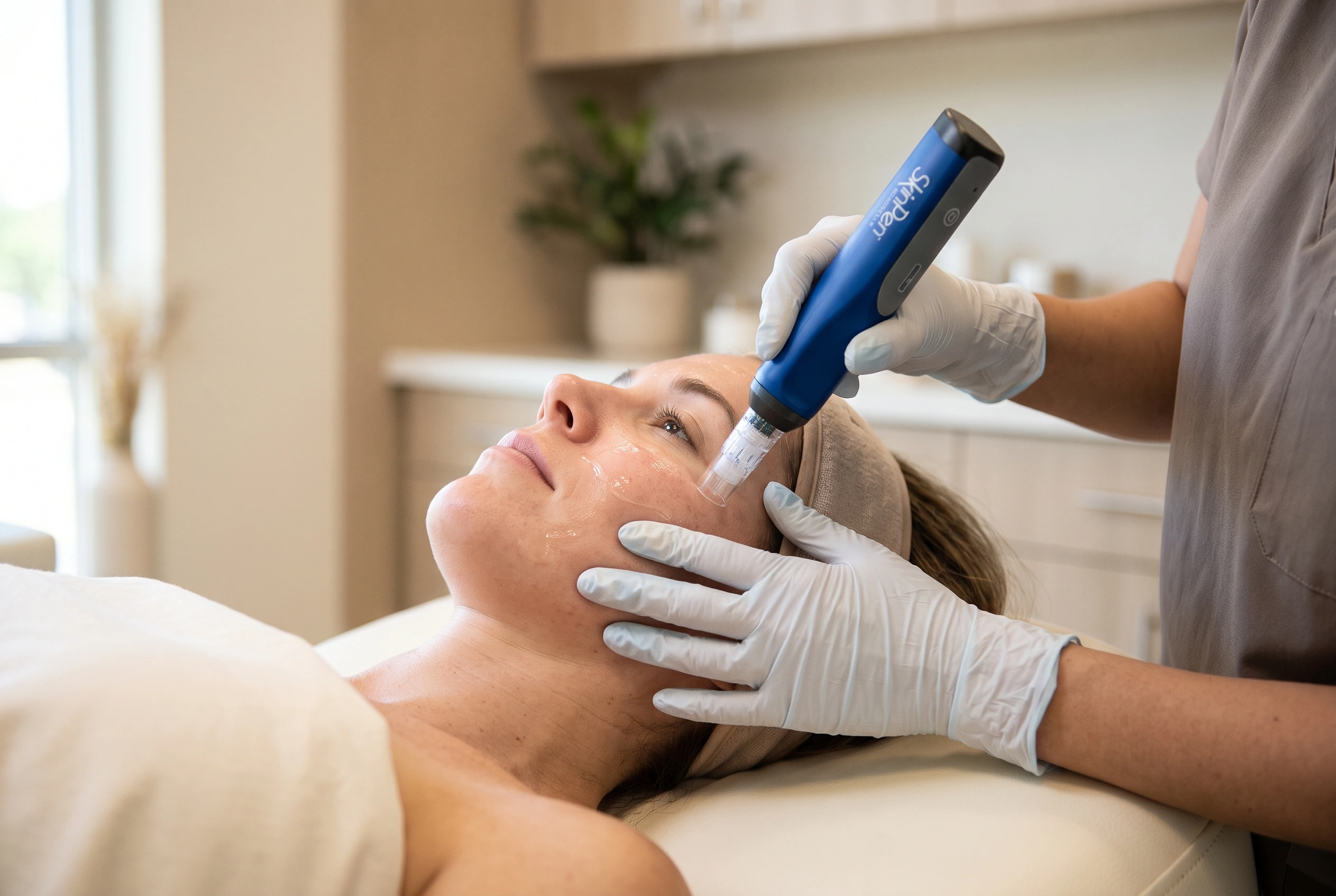
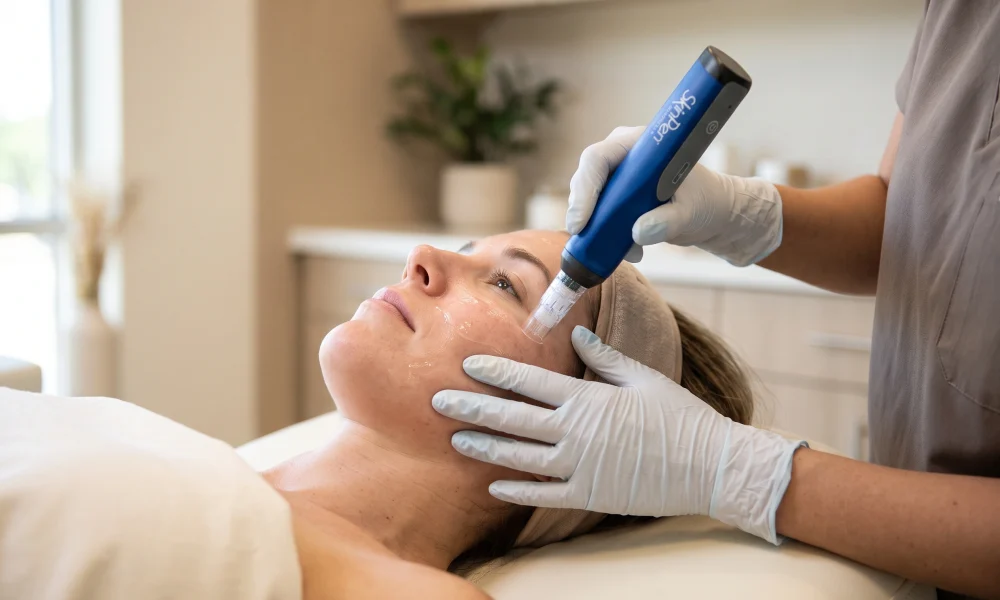
The handpiece holds a sterile cartridge of fine needles that move rapidly in and out of the skin, creating thousands of microscopic channels as the provider glides it across each area. Depth is adjusted zone by zone, shallower over the thin skin near the eyes and deeper over the cheeks, where pore stretching is usually most visible.
Each channel closes within hours, yet the skin registers it as a small injury and responds with an organized repair process. Platelets and growth factors arrive almost immediately, and over the weeks that follow, fibroblasts lay down fresh collagen and elastin that continue to mature for months. Because the channels are spread evenly across the treated area, that repair happens around and between pores at the same time, thickening the dermis that frames each opening.
SkinPen relies on mechanical stimulation alone, with no heat or light energy involved. That makes it a practical choice for patients who want a collagen treatment with short downtime, and it is one reason microneedling suits a wide range of skin tones.
What Does the Research Say About Microneedling and Pores?
Pore-specific research is thinner than the research on acne scars, partly because pore size is hard to measure consistently from one clinic to the next. The studies that do exist point in an encouraging direction. In a 2025 case series published in Plastic and Reconstructive Surgery Global Open, 15 patients with enlarged pores on the cheeks and nose received microneedling combined with poly-D,L-lactic acid, a collagen-stimulating compound, and their average pore grade fell from 6 to 3 on a seven-point scale by week 12, with the improvement holding through week 22 (Wan et al., Plast Reconstr Surg Glob Open, 2025).
The study was small and had no control group, and the result reflects microneedling paired with an added ingredient. It still illustrates the mechanism well. The improvement built over the months after treatment, matching the timeline of collagen remodeling, and it lasted well past the point when any swelling or surface effect would have faded.
Which Kinds of Large Pores Respond Best to SkinPen?
Enlarged pores come in several distinct types, and each one responds to microneedling a little differently. The table below summarizes the patterns our providers see most often in Dallas patients.
Pore type | Where it usually appears | Main driver | How SkinPen tends to perform |
|---|---|---|---|
Stretched, aging pores | Cheeks, often oval or teardrop shaped | Loss of collagen and elastin with age | Strong candidate, since rebuilding support around the pore is the core of the treatment |
Post-acne pores | Cheeks and temples | Lasting damage to follicle walls from repeated inflammation | Good response over a full series, often treated together with acne scarring |
Sun-damaged pores | Cheeks and nose | Ultraviolet breakdown of dermal collagen | Good response, frequently paired with light-based treatment for pigment |
Oil-driven pores | Nose and central forehead | Heavy sebum output stretching the follicle | Partial improvement, with oil control through peels and skincare mattering as much |
Inherited wide pores | Across the T-zone | Thicker skin and naturally larger follicles | Modest refinement that maintenance sessions help preserve |
The pattern is consistent. Pores that widened because their surrounding support weakened tend to tighten noticeably, while pores that are mainly packed with oil need a plan that addresses sebum as well. Most faces show a mix, with oil-driven pores across the nose and stretched pores on the cheeks, which is why a consultation looks at each zone separately. When pigment and redness from sun exposure sit alongside the pores, adding BBL photorejuvenation in Dallas to the plan addresses the discoloration that microneedling leaves largely untouched.
How Many SkinPen Sessions Do Large Pores Need?
Most patients treating pores complete a series of three to six sessions spaced about four weeks apart. The four-week interval gives each round of collagen time to form before the next session builds on it. Patients with mild, early stretching often finish toward the lower end of that range, while long-standing pores from acne or sun damage usually need the full series.
The skin often looks brighter and smoother within a week or two of a session, mostly because the surface has turned over. The change in the pores themselves arrives later. Visible tightening usually becomes apparent around the third session and keeps building for three to six months after the final one, as the new collagen matures and contracts. Photographs taken before the first session and again a few months after the last are the most reliable way to judge progress, since gradual change is nearly impossible to track in a bathroom mirror.
Planning tip: Starting a SkinPen series in the fall or winter keeps freshly treated skin away from peak Texas sun and puts the fullest result around spring. Patients who begin in summer can still do well, provided they stay strict with sunscreen and shade between sessions. |
Results hold well, though the skin keeps aging on its own schedule. Many patients return for one or two maintenance sessions a year to keep collagen production steady around the pores.
What Does a SkinPen Session Feel Like?
Each appointment begins with cleansing and a topical numbing cream, which sits on the skin for a short while before treatment starts. Once the skin is numb, a thin glide serum is applied and the provider moves the device across the face in passes, spending extra time on the zones where pores are most visible. Patients usually describe the sensation as light pressure with a fine scratching feel, and the areas over bone near the nose and forehead tend to register a little more. A session takes 30 to 60 minutes depending on the areas treated.
Afterward the skin looks flushed, similar to a mild sunburn, and that redness usually settles within 24 to 72 hours. Most people are back at work the next day. For the first few days, gentle cleansing and daily broad-spectrum sunscreen give the micro-channels the best conditions to heal. Retinoids and exfoliating acids go back into the routine once your provider clears them, typically after several days.
Can PRP or Exosomes Improve Pore Results?
Lily offers two add-ons that are applied to the skin during a SkinPen session. PRP microneedling uses platelet-rich plasma prepared from a small sample of your own blood, carrying concentrated growth factors into the freshly opened channels. Exosome microneedling uses exosomes, tiny cellular messengers rich in proteins and signaling molecules, to support repair and hydration.
Both are designed to strengthen the healing response that drives collagen production. Research on add-ons for pores specifically is still early, so we present them as enhancements to a well-planned series. Patients with more advanced texture concerns often choose one of them after talking it through with their provider.
Who Is a Good Candidate for SkinPen for Pores?
SkinPen suits adults whose pores have widened gradually and who want a natural improvement in texture without the heat of a laser. In consultations at our Dallas office, two profiles come up more than any other:
- Patients in their thirties and older who notice pores on the cheeks turning oval or elongated as the skin loses firmness
- Patients with a history of acne whose breakouts are under control but whose pores and texture never fully recovered
Because microneedling uses no heat or light, it carries a lower risk of pigment changes than many laser treatments, which makes it a practical option for medium and deeper skin tones. Your provider will still assess your skin type and history before the first session.
Treatment is usually postponed over active breakouts or infection in the treatment area and during pregnancy. Recent isotretinoin use and a tendency toward keloid scarring are also worth raising at the consultation, since both affect how the skin heals.
How Does SkinPen Compare to Lasers and Facials for Pores?
SkinPen is one of several tools that can refine pores, and the right choice depends on what else your skin needs. HALO laser treatments in Dallas, TX combine two laser wavelengths in a single pass and often suit patients whose pores come with sun damage and fine lines, at the cost of a few more days of downtime. For the most pronounced texture concerns, laser skin resurfacing in Dallas, TX reaches deeper and asks for a longer recovery in return.
For oil-driven pores, the surface matters as much as the dermis. Regular facial treatments in Dallas, TX, including chemical peels, clear the debris that makes a pore look darker and wider, and they fit neatly between SkinPen sessions. Our guide on how to prepare for your first facial treatment is a useful starting point for patients new to in-office skin care. At home, a retinoid and a well-chosen medical-grade skincare routine keep oil and cell turnover in balance, which protects the gains made in the treatment room.
Frequently Asked Questions
Does SkinPen permanently shrink pores?
SkinPen makes pores look smaller by strengthening the collagen that surrounds them, and the improvement lasts a long time once that collagen has matured. The skin continues to age afterward, so occasional maintenance sessions help keep the result steady.
How soon will I see a difference in my pores?
Skin usually looks smoother within a week or two of the first session. Pore tightening appears more gradually, often becoming noticeable by the third session and continuing for several months after the series ends.
Is SkinPen better than a laser for large pores?
Each has its place. SkinPen suits patients who want minimal downtime and those with deeper skin tones, while a laser such as HALO may be the stronger choice when pores come with significant sun damage. Your provider will recommend the better fit after examining your skin.
Can SkinPen help oily skin with large pores?
It improves the structural side of oily-skin pores, though it has limited effect on oil production itself. Pairing microneedling with peels and a retinoid usually gives oily skin the most balanced result.
Does microneedling for pores hurt?
Numbing cream keeps the treatment comfortable for most patients, who describe light pressure and a scratching sensation. Areas over bone, such as the forehead and the bridge of the nose, can feel a bit more intense.
When can I wear makeup after SkinPen?
Most providers recommend waiting about 24 hours so the micro-channels can close before anything is applied over them. Mineral makeup is usually the easiest place to start once the skin feels calm.
Taking the Next Step
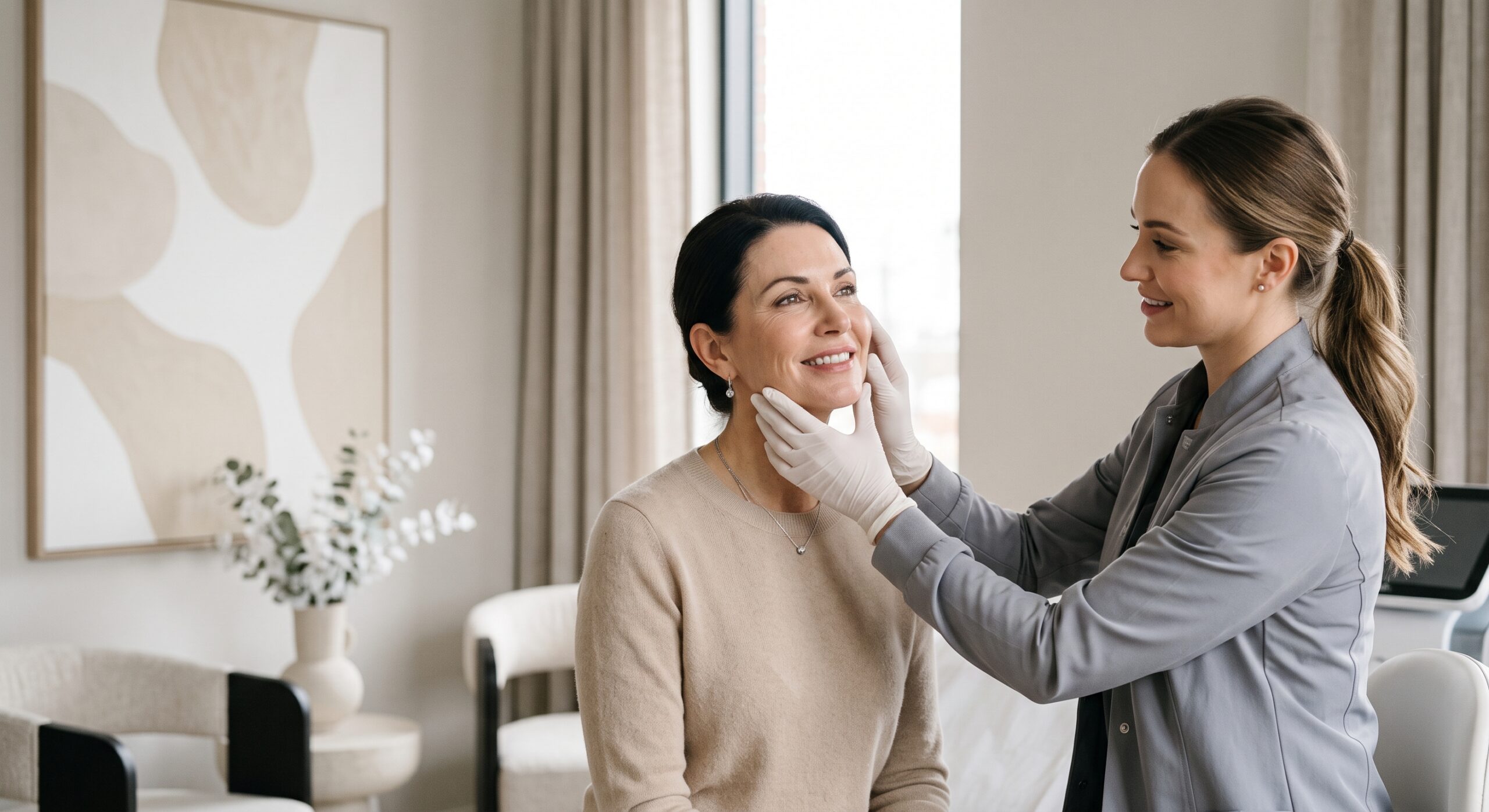
If your pores have gradually widened and products have stopped making a visible difference, the most useful step is having a provider look closely at what is driving them. Our team will assess each zone of your face separately and build a SkinPen plan around the texture you want to see.
Book your SkinPen consultation at Lily Aesthetics today.
References
- Wan J, Seo SB, Yoon SE, Yi KH. The Efficacy of Combined Microneedling and Topical Poly-d,l-lactic Acid (Juvelook) Application for Facial Pore Reduction and Skin Texture Improvement. Plast Reconstr Surg Glob Open. 2025;13(6):e6838. pubmed.ncbi.nlm.nih.gov
- Dong J, Lanoue J, Goldenberg G. Enlarged facial pores: an update on treatments. Cutis. 2016;98(1):33-36. pubmed.ncbi.nlm.nih.gov
- U.S. Food and Drug Administration. De Novo Classification Request for SkinPen Precision System (DEN160029). accessdata.fda.gov